
Sep 15, 2025
Bringing neurovascular care forward: Clinical voices from across Asia Pacific
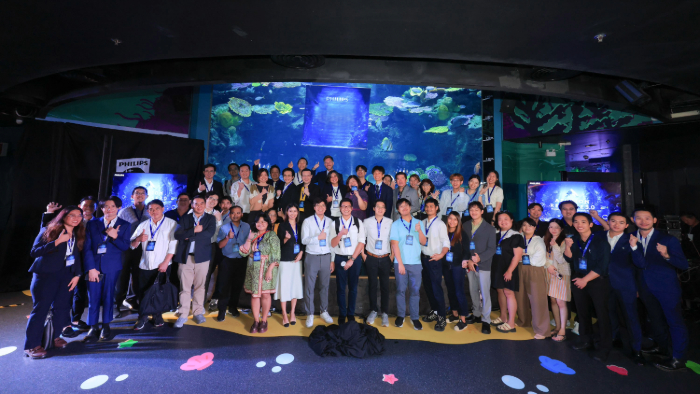
With stroke remaining one of the most urgent healthcare challenges across Asia Pacific, hospitals and health systems are accelerating efforts to streamline care pathways and enhance decision-making at every step. In Thailand alone, stroke affects over 250,000 people annually and remains the second leading cause of death. As clinicians and technology leaders gathered for a regional dialogue event hosted by Philips — set fittingly against the immersive backdrop of an aquarium— one message stood out clearly: time is brain, and collaboration is key.

The regional dialogue was held in conjunction with the launch of a new image-guided therapy system designed to support neurovascular interventions. The event brought together clinicians and health system leaders to explore how innovation in stroke care can translate into better outcomes for patients across Asia Pacific.
From Imaging to Intervention: Innovating at the Speed of Stroke
During the event, healthcare leaders discussed new approaches that reduce time-to-treatment by integrating diagnosis and therapy more closely than ever before. One such approach—Direct-to-Angio-Suite (DTAS)—is gaining attention across the region for its potential to help stroke teams bring eligible patients directly from the emergency department into treatment, bypassing intermediate steps.
“When it comes to treating stroke patients, every second counts,” said Sebastian Slijderink, Business Marketing Manager for Image Guided Therapy, APAC, Philips. “With the right workflow, we can reduce delays and preserve more brain tissue.”
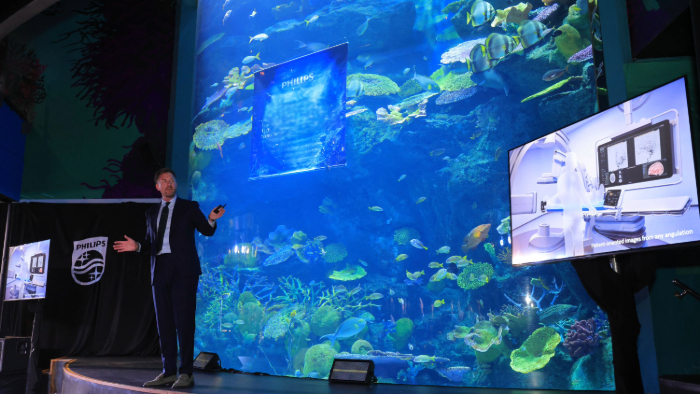
That urgency is shared by clinicians.
“Fast and advanced technology enables earlier diagnosis and treatment, helping preserve brain tissue affected by reduced blood flow,” explained Dr. Win Theerapancharoen, Neurosurgeon and Interventional Neuroradiologist, Chulabhorn Hospital, Thailand. “If the images aren’t clear, treatment planning may be misguided—and that could lead to complications.”
“We were surprised by the ability to skip conventional CT in some cases,” added Prof. Kuniyasu Niizuma, Neurosurgeon, Tohoku University, Japan. “That’s very good for the patient—the flow of treatment becomes faster and safer.”
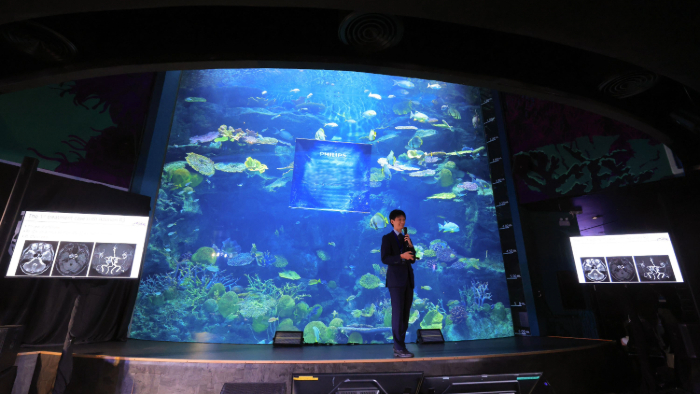
Much like an aquarium ecosystem where precise timing and coordination are vital, today’s stroke workflows rely on seamless clinical decisions—flowing together toward faster intervention and better patient outcomes.
From Insight to Impact: Clinician-Centered Innovation
What makes such advances possible? For Philips, it begins with close collaboration between engineering teams and the end users.
“At Philips, we aim for meaningful innovation—solutions created with deep clinical input and real-world relevance,” said Concon Molina, MD, Head of Image Guided Therapy Systems, APAC and Marketing Leader, Growth Region, Philips. “A good example is the direct-to-angio workflow. With strong image quality, we can support stroke diagnosis and treatment in a more integrated way, so that eligible patients can now skip certain scans and get treated right away. That’s what meaningful innovation looks like.”
“We’re not just building tools,” she added. “We’re enabling clinicians to move with speed and confidence—and we’re doing it by listening carefully to what they need.”

Clinical Leaders at the Forefront
The event’s panel discussion featured five leading neuro interventionists, including: From precise imaging to safer, minimally invasive procedures, the conversation centered on how to empower clinicians while advancing the broader healthcare system.
“Diseases like stroke, brain aneurysms, and arteriovenous malformations (AVMs) remain some of the most complex to treat,” said Asst. Prof. Ittichai Sakarunchai, Neurosurgeon and Interventional Neuroradiologist, M.D., Taksin Hospital, Thailand. “Physicians are constantly developing safer, more effective approaches—and that’s only possible through continuous innovation and shared knowledge.”
“We’ve seen first-hand how patients who arrive with severe symptoms are able to return home and regain their quality of life,” he added. “That transformation is what inspires physicians every day.”
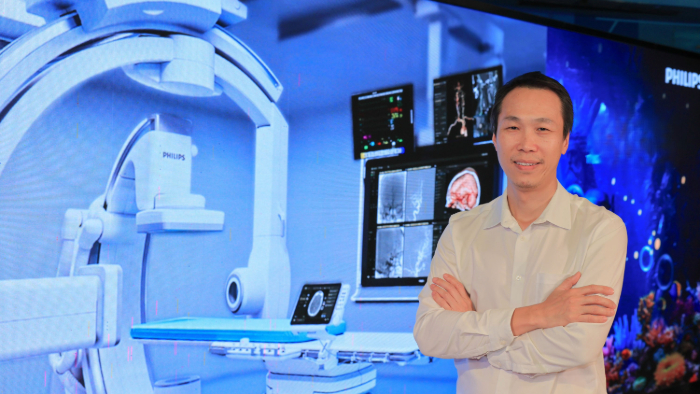
“In the past, many neurovascular procedures required open-skull surgery, with high risk and complications,” reflected Dr. Win. “Today, with minimally invasive techniques, we can treat patients far more safely. That evolution in care is incredibly meaningful to all of us.”
A Regional Mission for Better Care
For Philips and its partners, advancing stroke care is about more than technology—it’s about system transformation.
“Looking ahead, diagnostic imaging and the use of angio suites will become even clearer, require less radiation, and allow for faster treatment times, which also shortens operation times for patients,” said Dr. Win. “It’s both a challenge and an opportunity for doctors to use these innovations to enhance patient safety and deliver the best possible results.”
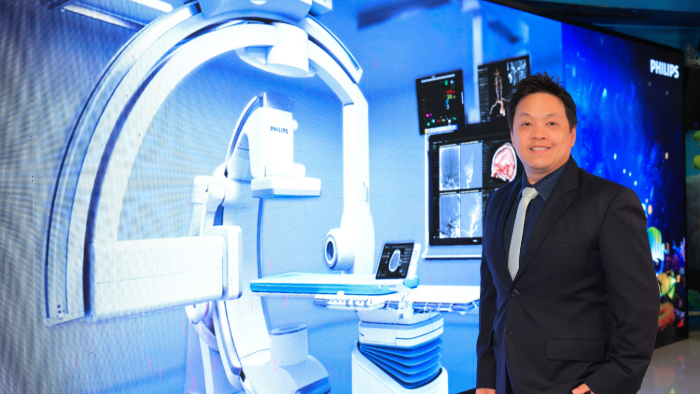
“Stroke care in Asia Pacific is changing rapidly,” said Concon. “By supporting streamlined workflows and clinician-driven solutions, we’re helping health systems become future-ready.”
Held beneath a canopy of gliding stingrays and tranquil blue light, the event served as a vivid metaphor for the future of healthcare—fluid, connected, and built on shared ecosystems of expertise.
Whether it’s through DTAS pathways, regional knowledge sharing, or empowering physicians with the tools and training they need, the goal remains clear: to deliver better care, for more people, across Asia Pacific.
Watch the highlights
Get a closer look at the voices, ideas, and inspiration that shaped this important regional dialogue on stroke care.



Related news
-
![Why resilience in MRI now matters as much as performance]()
April 01, 2026


