
Philips Large Display
Looks better
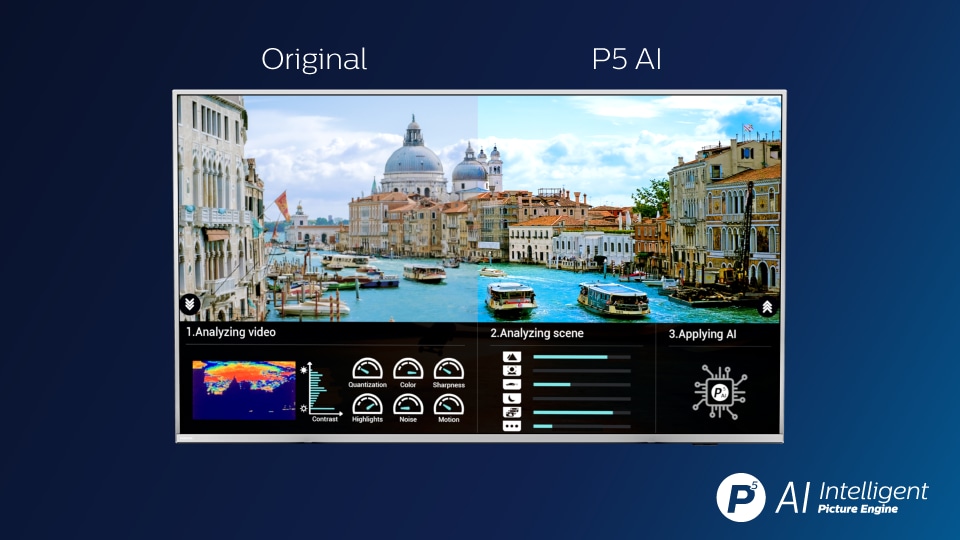
Philips P5 Picture Engine with AI
A picture so real you could step right into it
P5 picture perfection
The five pillars of picture quality


Source perfection
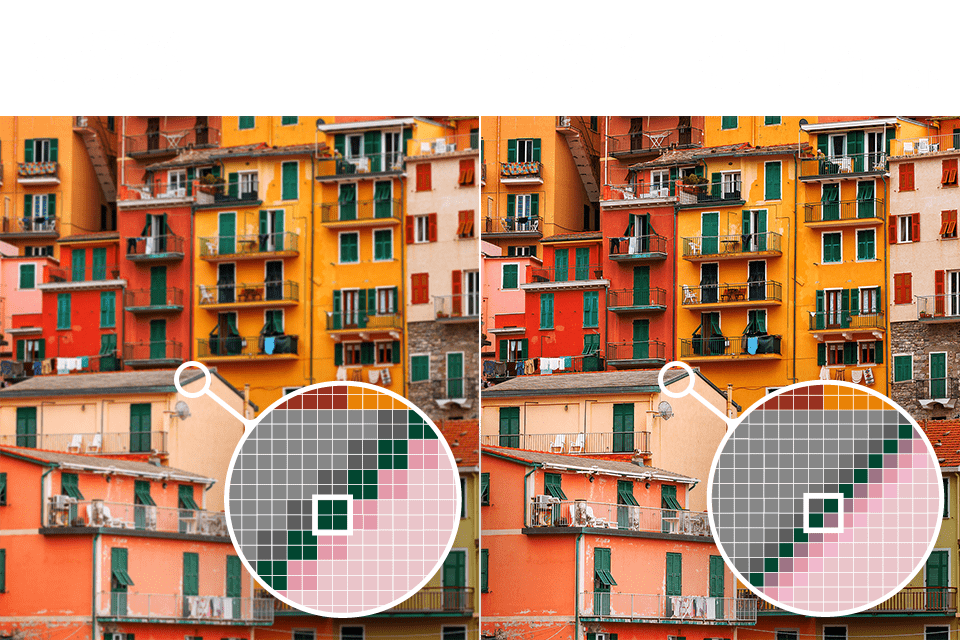
Visual imperfections such as noise and artefacts can be seen in almost all television content. The P5 corrects these, reducing noise without introducing annoying blurring and eliminating banding by extending 8 bit video to near 14 bit precision.
Perfect Sharpness
Most pictures have a resolution that is just a fraction of the 4K that today’s screens are capable of displaying. The P5’s Detail Enhancer upscaling algorithm solves this by transforming content into a sharper Ultra HD picture. The result is a more refined image with noticeably more depth and dimension.
Perfect Colour
The 10 bit colour processing used in most TVs restricts the range of colours that can be shown, regardless of the display quality. By applying 17 bit processing, the P5 unlocks millions more colours. Saturations are more vivid and intense, while skin tones are more natural.
Perfect Contrast
By expanding the range of contrast, the P5 can make bright parts of the image brighter and darker areas "more black". The result is a picture with more depth and preservation of detail, creating more of the feeling that you are "inside" the action.
Perfect Motion
Film cameras capture motion by taking 24 individual photos, or "frames" each second. Because of this, we experience fast camera movements as disturbing "judder". The P5 adds three extra "in between" images to each original frame for an incredibly smooth, fluid and natural viewing experience.
Philips P5 Processor
-
QD MiniLED
4K QD MiniLED TV
85MLED800/56
- 215cm (85") 4K QD Mini-LED TV
- Google TV™
- Dolby Vision & Dolby Atmos


